
REST vs GraphQL: API Design for Web Applications
Your web app needs an API for the frontend to talk to the backend. REST and GraphQL are the two main approaches. REST is simple and widely understood. GraphQL gives clients flexibility to request exactly what they need. Here's when to use each.

Quick Answer
REST: Simple, cacheable, standard. Best for: CRUD apps, predictable resources. GraphQL: Client specifies fields, single endpoint. Best for: complex UIs, mobile + web, multiple clients with different data needs.
Table of Contents
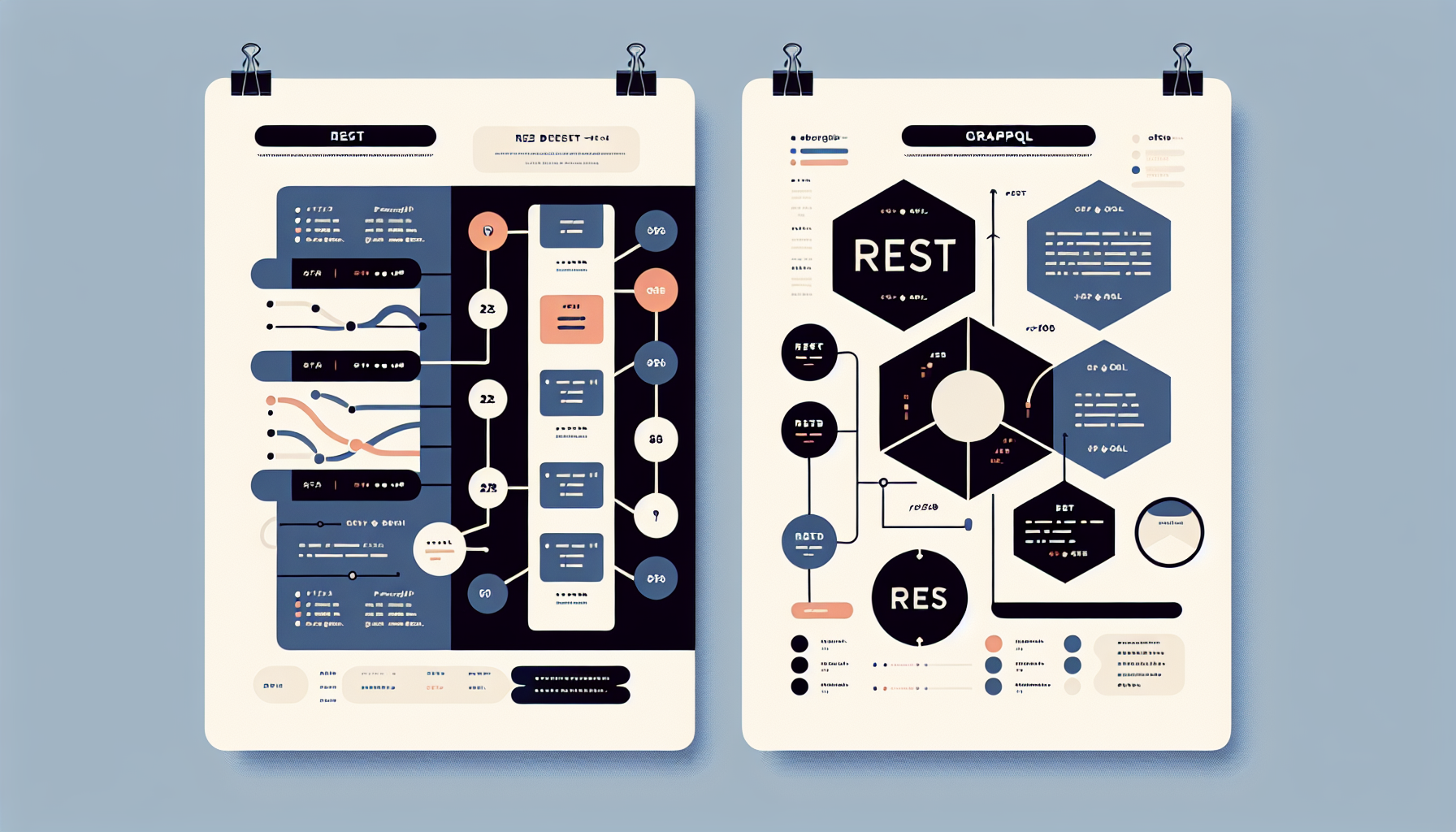
REST
Resources as URLs. GET /users, POST /orders, PUT /users/1. Stateless, HTTP methods map to CRUD. Easy to cache, simple to implement. Over-fetching (get full user when you need name only) or under-fetching (multiple round-trips) can happen.
- Pros: Simple, cacheable, tooling, widely understood
- Cons: Can over/under-fetch, versioning (v1, v2) can get messy
GraphQL
Single endpoint. Client sends a query specifying exactly which fields it needs. One request can fetch user + orders + nested data. No over-fetching. Schema is self-documenting. More complex to implement; caching is harder (no HTTP cache by default).
- Pros: Flexible queries, no over-fetching, strong typing, single endpoint
- Cons: Complexity, N+1 risk, caching requires extra work
Comparison
| Factor | REST | GraphQL |
|---|---|---|
| Learning curve | Low | Medium |
| Caching | HTTP cache | Custom (Apollo, etc.) |
| Flexibility | Fixed endpoints | Client-defined |
When to Use Each
REST: Simple CRUD, internal APIs, when team is familiar with REST. GraphQL: Complex UIs with varying data needs, mobile + web sharing API, public API with many consumers. For most B2B apps, REST is sufficient. Consider GraphQL when you feel the pain of over/under-fetching.
Frequently Asked Questions
Can we use both?
Yes. Some teams use REST for simple CRUD and GraphQL for complex queries. Or add GraphQL as a layer on top of REST. Hybrid is valid but adds complexity — start with one.